How to Achieve the Viral French Girl Hair Look: Essential Hair...
90s hairstyles
Exploring 90s hairstyles — have returned with updated formulations that make them easier to achieve and maintain than the original versions. Claw clips — the oversized tortoiseshell clips that defined the decade — are back in modernized designs from brands like Kitsch and Scunci. The technique for a claw clip updo has been refined: instead of twisting all your hair into a single tight bun, gather the lower half, twist upward, and clip at the crown, leaving the top section loose for volume.
Micro braids and cornrows have also resurged, with improved braiding techniques that put less tension on the hairline. For heat-styled 90s looks, crimping irons like the Bed Head A-Wave We Go Adjustable Waver create the deep, uniform waves that defined the era. The key to modernizing 90s hair is imperfection — the original looks were stiff and precise, while 2026 versions embrace natural texture and movement. A spritz of Bumble and bumble Does It All Styling Spray provides flexible hold that keeps the shape without the crispy finish of 90s aerosol hairsprays.
Blow-Dry
Heat damage from blow-drying is cumulative and largely irreversible — each exposure weakens the hair's protein structure until the cortex cracks and splits. Minimizing damage requires attention to three factors: temperature, distance, and preparation. Always apply a heat protectant before blow-drying — Bumble and bumble Hairdresser's Invisible Oil Heat/UV Protective Primer distributes evenly and doesn't weigh hair down. Set your dryer to medium heat, not high — the temperature difference between medium and high is often 50 degrees or more, yet medium achieves the same result with significantly less damage.

Maintain at least six inches of distance between the dryer nozzle and your hair, and keep the nozzle moving continuously to prevent concentrated heat exposure. Direct the airflow downward from roots to ends to smooth the cuticle; upward airflow roughs it up and creates frizz. Invest in an ionic dryer like the Dyson Supersonic — ionic technology breaks down water molecules faster, reducing drying time and therefore total heat exposure. Finish with a cool shot to seal the cuticle and lock in the style.
Building Your Routine
Building a complete hair care routine for fine hair requires products that address oiliness, color fading, and dullness simultaneously. Mason Pearson is the foundation — its waterproof formula smooths uneven texture without pilling. Redken Shades EQ provides natural-looking coverage for oiliness, while Olaplex No.'s Olaplex No. 4 targets color fading with glycolic acid. Clairol Natural Instincts addresses dullness by dissolving intercellular bonds. The routine should be followed three times weekly for optimal results. Adjust the frequency based on your hair's response — fine hair typically needs more protein compared to other hair types.
Air-Drying
Getting started with air-drying — eliminates the heat damage that causes split ends, breakage, and frizz, but it requires the right technique to look intentional rather than unkempt. Start by applying a leave-in conditioner to damp hair — Ouai Leave-In Conditioner detangles and provides heat-free styling memory that helps hair hold its natural wave pattern as it dries. For straight hair that tends to fall flat, scrunch a sea salt spray like Bumble and bumble Surf Spray into the mid-lengths and ends, then twist sections into loose buns and let them air-dry before releasing for natural waves.
Curly and coily hair benefits from the "shingling" method: apply a curl cream like SheaMoisture Coconut & Hibiscus Curl & Style Milk to small sections, smoothing each one between your fingers to define the curl pattern. Avoid touching your hair while it air-dries — friction disrupts the cuticle and creates frizz. Once fully dry, smooth a small amount of hair oil like Moroccanoil Treatment through the ends to add shine without weighing down the roots.
Curly and coily hair
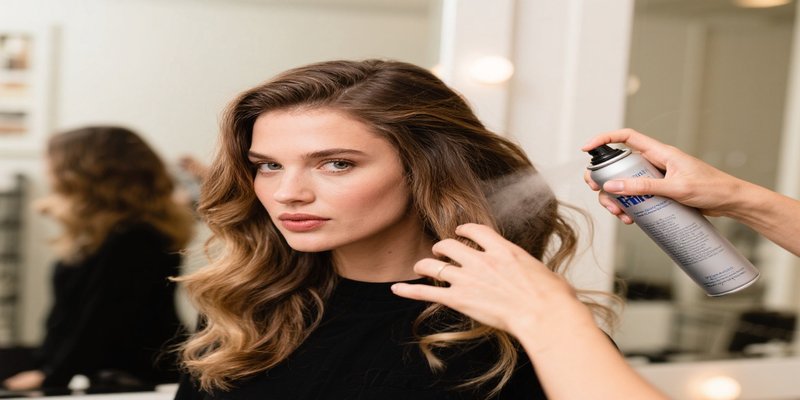
Curly and coily hair requires a fundamentally different approach from straight hair because the natural oils from the scalp can't travel down the coiled shaft to moisturize the ends. The Curly Girl Method, formalized by Lorraine Massey, provides a framework: cleanse with a sulfate-free shampoo or co-wash (conditioner-only washing) like As I Am Coconut CoWash, condition generously, apply styling products to soaking-wet hair, and never use terrycloth towels — which create frizz — in favor of microfiber or cotton t-shirts. Styling products should be layered: a leave-in conditioner like Kinky-Curly Knot Today first, followed by a curl cream like SheaMoisture Coconut & Hibiscus Curl Enhancing Smoothie, and finally a gel like Eco Styler Olive Oil Gel for hold.
The "shingling" technique — smoothing each curl individually with product-coated fingers — produces the most defined results but is time-consuming. For a faster approach, "raking" product through larger sections with your fingers works well for looser curl patterns. Air-dry whenever possible; diffusing on low heat and low speed is acceptable but increases frizz risk.
Hair Porosity
There's more to hair porosity — — the hair's ability to absorb and retain moisture — is the most overlooked factor in product selection. Low-porosity hair has a tightly closed cuticle that repels moisture, causing products to sit on the surface rather than absorbing. This hair type benefits from lightweight, liquid-based products like Mielle Organics Pomegranate & Honey Leave-In Conditioner and should avoid heavy butters and oils that create buildup.
High-porosity hair has an open, damaged cuticle that absorbs moisture quickly but loses it just as fast — it requires rich, sealing products like Camille Rose Algae Renew Deep Conditioning Mask followed by an oil like Jamaican Black Castor Oil to lock in hydration. The float test gives a rough indication: drop a clean hair strand into a glass of water. If it floats, it's likely low porosity; if it sinks quickly, it's high porosity; if it sinks slowly, it's normal. Understanding your porosity prevents the common mistake of applying heavy products to low-porosity hair or lightweight products to high-porosity hair.

Most Read
Why More Men Are Getting Cosmetic Procedures
Nail Stamping: Professional Designs in Minutes
Preventative Botox: When to Start and What to Expect
Rich Moisturizers for Dry Skin With 24-Hour Hydration
The Complete Guide to Facial Massage Techniques: Essential Ski...